2603 Chicago
Open Pavilion ADU, Concept Design – Logansquare, Chicago, Illinois
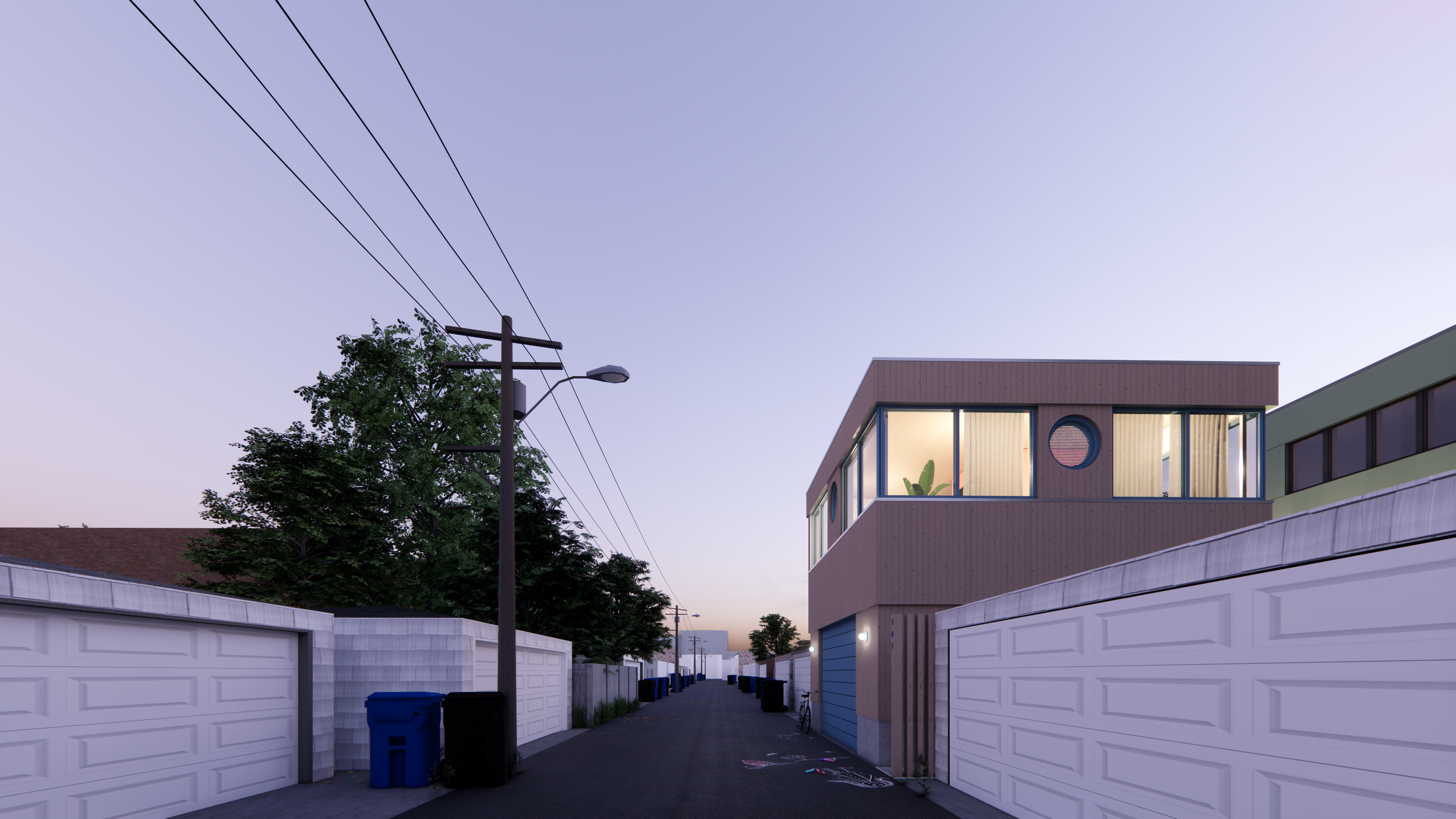
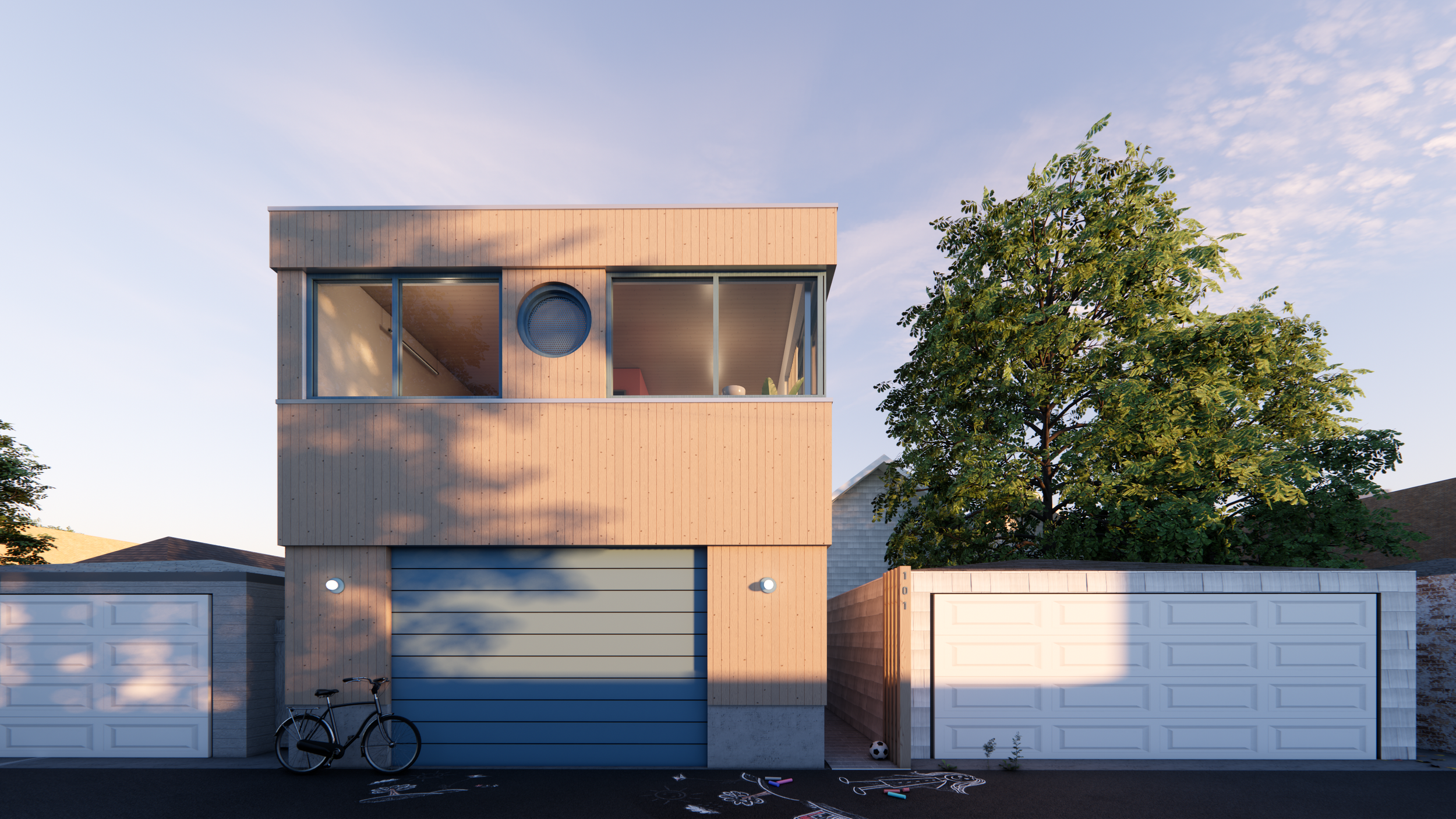
This conceptual accessory dwelling unit reimagines small-scale urban living through openness, light, and spatial efficiency. Located above a garage on a typical 25 x 125 ft Chicago lot in Avondale, the project explores how a compact dwelling can feel expansive without increasing its footprint.
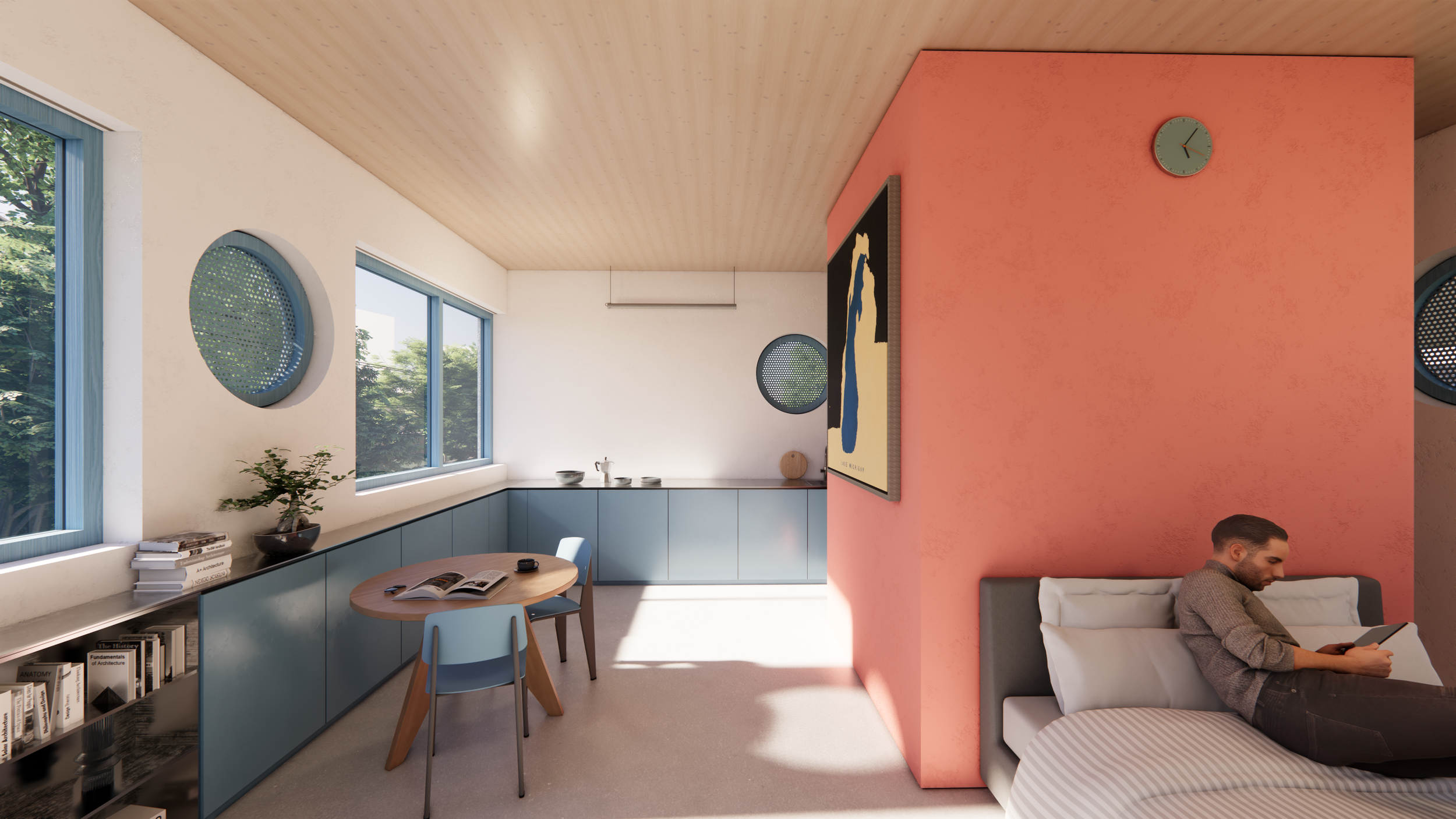
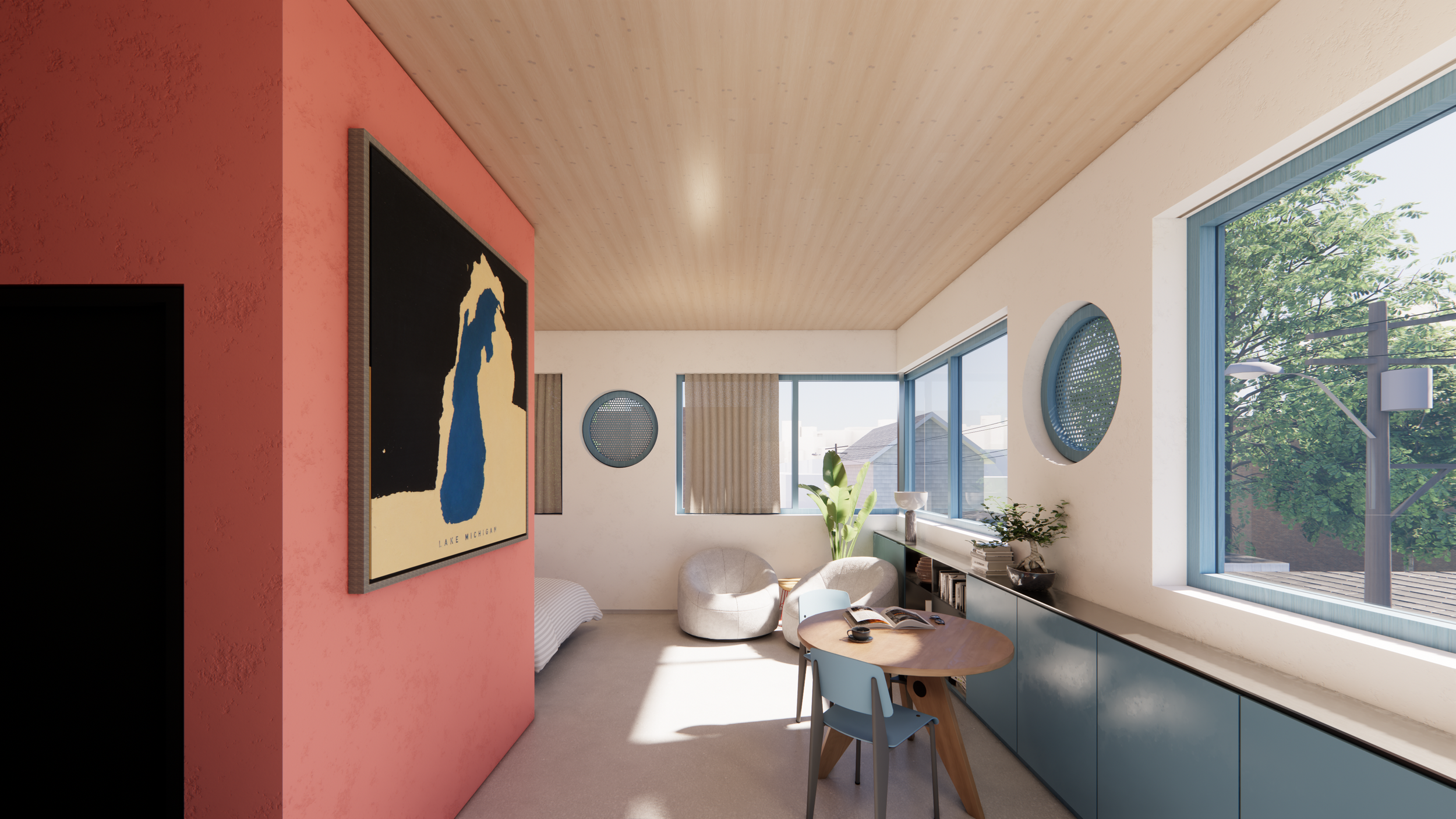
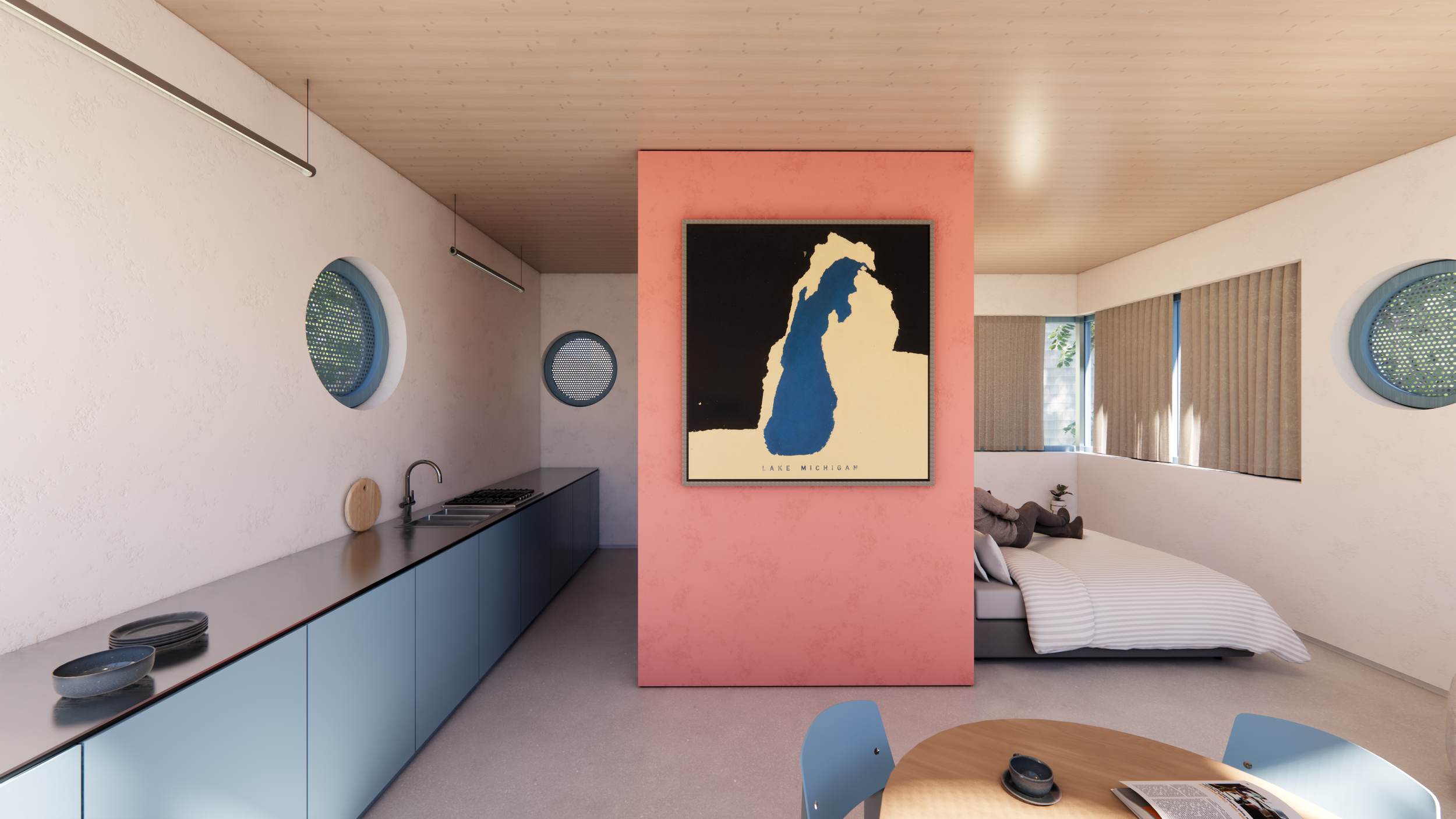
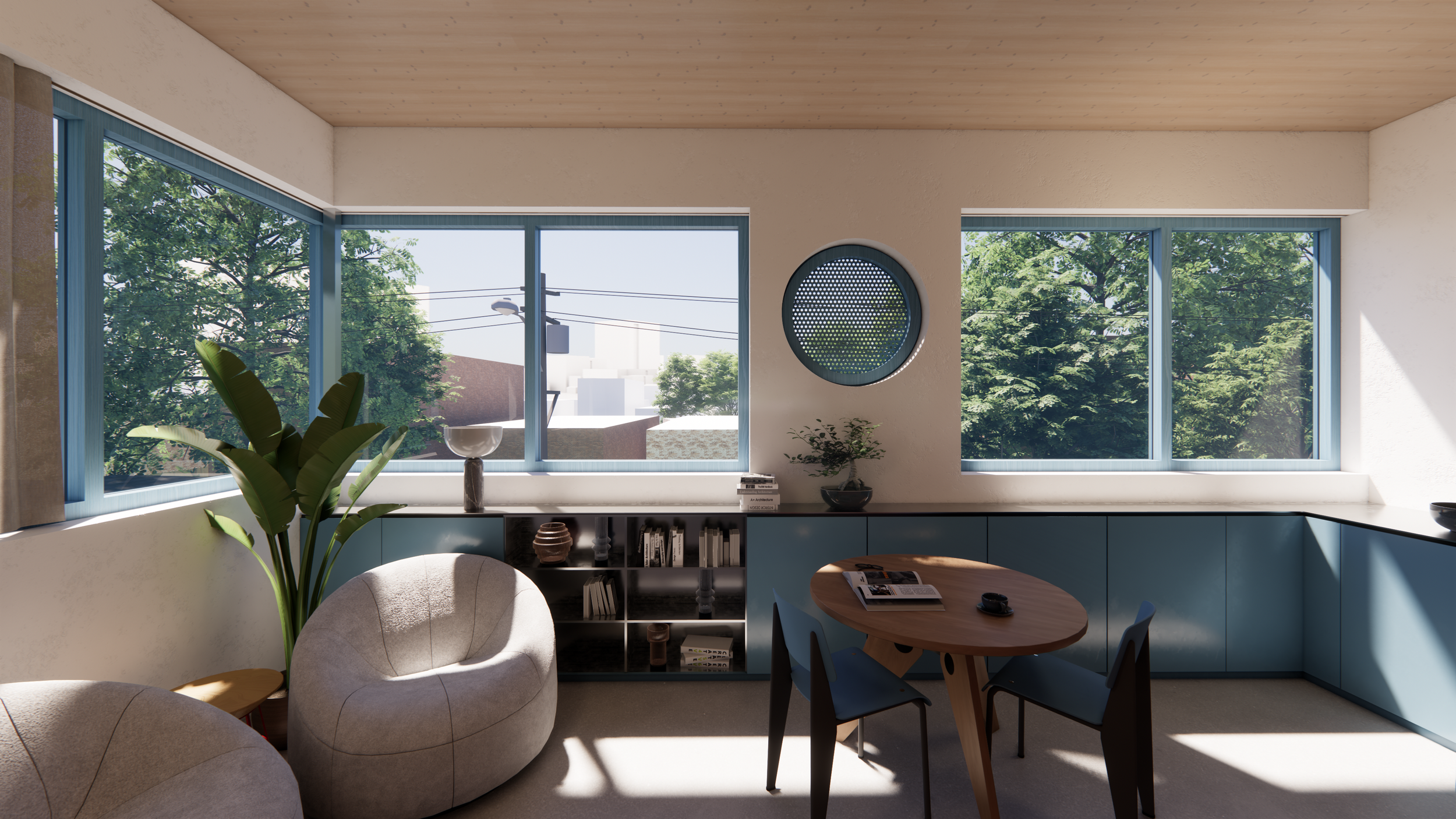
Rather than dividing the interior into a series of rooms, the design is organized as a single continuous living space. A compact enclosed bathroom volume occupies the center of the plan, acting as both the functional core of the dwelling and the primary element around which daily life unfolds. By consolidating enclosed functions into a single object, the remainder of the floor remains open, flexible, and adaptable to changing needs.
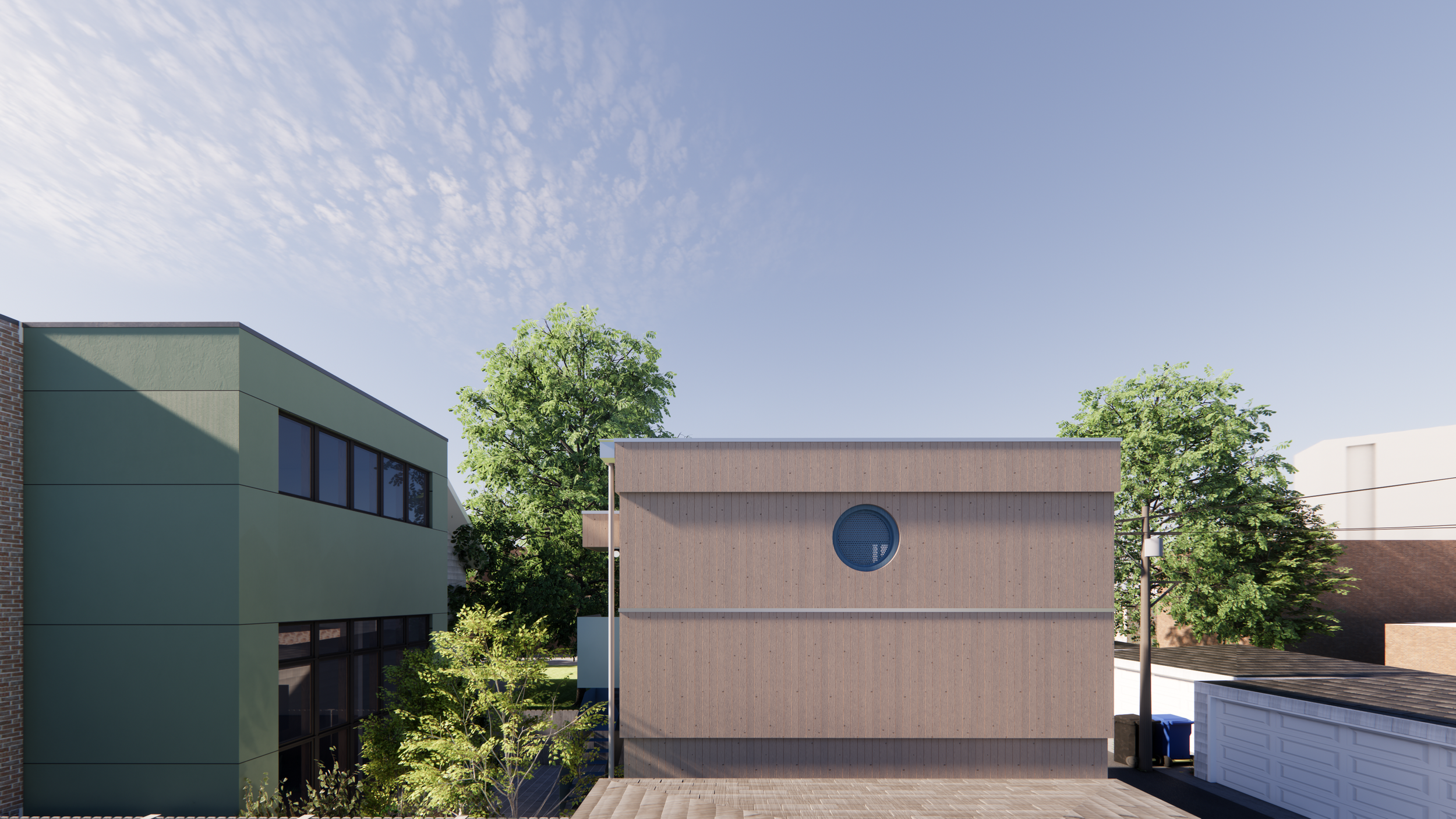
The architecture is shaped by daylight and views. Large windows wrap three sides of the building, capturing morning and afternoon light while framing views toward neighboring gardens, mature trees, and the surrounding urban landscape. Openings facing adjacent properties are carefully controlled to maintain privacy, creating a balance between transparency and seclusion.
The resulting interior feels more like a loft or garden pavilion than a conventional apartment. Living, dining, sleeping, and working areas flow seamlessly together, allowing occupants to define their own patterns of inhabitation rather than conforming to predetermined rooms. Built-in furnishings and storage are integrated along the perimeter, preserving openness while maximizing functionality within a compact footprint.
Externally, the building presents a simple and carefully proportioned volume clad in natural wood. Circular windows punctuate the facades, introducing moments of focus and individuality while complementing the larger expanses of glazing. The restrained material palette emphasizes craftsmanship, durability, and warmth, creating a contemporary interpretation of the traditional Chicago coach house.
The project demonstrates how accessory dwelling units can become opportunities for architectural experimentation. By prioritizing space over rooms, light over enclosure, and flexibility over convention, the design proposes a new model for compact urban living—one that feels generous, adaptable, and deeply connected to its surroundings.
Chicago’s ADU ordinance creates new opportunities for thoughtful small-scale urban infill within the city’s existing residential fabric. On typical alley-loaded Chicago lots, accessory dwelling units can support multigenerational living, flexible live/work arrangements, guest accommodations, or rental income while maintaining the scale and character of the surrounding neighborhood. Rather than treating the ADU as an afterthought, the project sees it as an opportunity for carefully crafted architecture at the smallest urban scale.